“It’s not about how hard you hit. It’s about how hard you can get hit and keep moving forward.”
The famous line from the movie Rocky has inspired people across all generations. Even if you haven’t seen the movie, the line itself can motivate you to get up and work towards your goal. That’s exactly what motivational speeches intend to do: inspire, lead, and act.
So, when you are looking for motivational speech topics, you need to find the one that can inspire and have a lasting impression on the minds of the listeners. But how would you do that?
Don’t worry, we can help you with that. We understand the pain of finding the right topic that fits all the requirements, and have listed 250+ motivational and inspirational speech topics to ensure you don’t fall short of ideas.

Key Takeaways
- Motivational speeches aim to inspire action, not just deliver words.
- Choosing the right topic determines how strongly the message resonates.
- The blog offers 250+ motivational speech topics across diverse audiences and themes.
- Topics are categorized by difficulty level, tone, and audience age.
- Relevance and relatability are essential for audience engagement.
- Strong speeches focus on one clear problem or emotion.
- Actionable ideas make motivational speeches more impactful.
- Personal experiences help build authenticity and connection.
- Proper structure and delivery enhance the effectiveness of any speech.
A List of 250+ Motivational Speech Topics
Let’s take you through a list of 250+ topics. Find the one that ticks all the boxes, then prepare your motivational speech.
A. Good Motivational Speech Topics
- The Role of Failure in Personal Success
- Motivation vs Discipline: What Drives Long-Term Growth
- The Power of Consistency in Achieving Goals
- Why Self-Belief Shapes Life Outcomes
- The Psychology Behind Staying Motivated
- How Challenges Build Inner Strength
- The Importance of Purpose in Motivation
- How Habits Influence Motivation
- Motivation in the Face of Repeated Failure
- The Impact of Mindset on Success
- Why Comfort Zones Limit Growth
- The Relationship Between Effort and Achievement
- How Motivation Evolves Over Time
- Internal vs External Motivation
- The Cost of Giving Up Too Early
- Motivation in Uncertain Times
- How Small Wins Fuel Big Success
- The Link Between Discipline and Freedom
- Motivation Without Recognition
- Why Persistence Matters More Than Talent

B. Interesting Motivational Speech Topics
- The Power of Growth Mindset: Cultivating a belief in your ability to develop skills
- Failure as a Stepping Stone: How setbacks fuel success
- Building Confidence: Practical steps to self-assurance
- The Art of Resilience: Bouncing back stronger from challenges
- Why Small Wins Build Big Momentum
- The Value of Delayed Gratification
- Breaking Free from Procrastination
- Finding Your Passion: The Key to Fulfillment
- Time Management for Self-Growth
- The Impact of Habits on Achieving Goals
- Clarity Beats Motivation in Personal Growth
- Leadership Begins with Small Steps
- The Power of Kindness in Changing the World
- Teamwork: The Strength in Collaboration
- Effective Communication: The Heart of Motivation
- How to Be a Good Role Model
- Why Students Lose Interest Despite Clear Goals
- The Psychology Behind Academic Stress
- Why Pressure Can Reduce Performance
- How Fear Impacts Learning
C. Easy Motivational Speech Topics
- Effective listening is important in daily life
- How can you develop practical leadership skills for real-world impact?
- The right ways to achieve personal goals
- The right ways to master public speaking and inspire others
- The ways to stay true to your values and ignore peer pressure
- What do people learn from love, war, and resilience?
- Personal experience of overcoming adversity and achieving success
- The need to unlock your inner potential for self-motivation
- The correct ways to rise above the ordinary and pursue excellence
- How to stay calm during challenges?
- The need to develop self-discipline
- The need to learn to trust the process
- How can you stay committed during difficult times?
- The need to learn to believe in yourself
- How to stay organized?
- The correct ways to move forward with confidence
- It is necessary to learn the ways to balance effort and rest
- You need to learn and manage stress gradually
- Learn to stay consistent to achieve your goals
- You must learn from your mistakes
D. Persuasive Motivational Speech Topics
- Why Consistency Matters More Than Short Bursts of Effort
- The Need to Normalize Academic Failure
- Why Comfort Zones Limit Student Growth
- The Importance of Mental Health in Education
- Why Hard Work Alone Is Not Enough
- The Case for Long-Term Skill Development
- Why Comparing Academic Paths Is Harmful
- The Importance of Learning at Your Own Pace
- Why Education Should Focus on Growth, Not Just Grades
- The Role of Discipline in Academic Success
- Why Patience Is a Critical Skill
- The Value of Delayed Success
- Why Quitting Is Sometimes Necessary
- The Importance of Self-Awareness in Learning
- Why Balance Matters in Academic Life
- The Need for Better Stress Management in Education
- Why Students Need Emotional Support
- The Case for Redefining Success
- Why Failure Should Be Treated as Feedback
- The Importance of Sustainable Effort
Looking for persuasive speech topics? We have a list that can help you with the process.
E. Funny Motivational Speech Topics
- Why productivity feel impossible during exam sessions?
- Understanding how procrastination is related to student lifestyle
- When deadlines feel very real
- The ways to be disciplined in a distracted world
- The myth of perfect study routines
- Understanding the reasons students work better under pressure
- Why students overthink about simple academic tasks?
- The time when all study plans fail miserably
- The ways to balance sleep, studies, and sanity
- Exploring the reality of last-minute preparation
- Trying to focus in online classes
- How to stay motivated after it vanishes after Monday?
- How to manage academic chaos gracefully?
- What can you learn from silly academic mistakes?
- Student life expectations vs reality
- The reasons group projects test patience
- Multitasking that never works
- When notes make no sense later
- The struggle of early morning classes
- Laughing through academic stress
F. Motivational Speech Topics for College Students
- Feeling Overwhelmed by Coursework Despite Good Planning
- Managing Academic Pressure Without Burning Out
- Dealing With Exam Stress During Competitive Semesters
- When College Life Feels More Stressful Than Expected
- Coping With Academic Failure in College
- Balancing Grades, Skills, and Mental Well-Being
- Feeling Average in a Highly Competitive College Environment
- Managing Deadlines That Never Seem to End
- When College Expectations Clash With Reality
- Handling Career Anxiety During Undergraduate Studies
- Learning to Stay Focused During Long Semesters
- Dealing With Comparison Among Peers
- Feeling Lost About Future Career Choices
- Managing Pressure From Family During College
- Learning to Recover After a Difficult Semester
- When Studying Hard Still Feels Insufficient
- Handling Self-Doubt in Academic Settings
- Learning to Adapt to Academic Independence
- Coping With Rejection in Internships or Projects
- Staying Consistent During Online or Hybrid Classes
G. Motivational Speech Topics for High School Students
- Academic Pressure Before Entering College
- Preparing Mentally for Competitive Entrance Exams
- Fear of Choosing the Wrong Academic Stream
- Managing Expectations During Crucial School Years
- Handling Comparison With High-Achieving Peers
- Feeling Unprepared for Higher Education
- Dealing With Stress During Board Exams
- Learning to Handle Early Academic Setbacks
- Pressure to Decide a Career Too Soon
- Balancing Academic Performance and Mental Health
- Managing Parental Expectations During High School
- Developing Confidence Before College Life
- Handling Fear of Failure at a Young Age
- Learning to Study Independently
- Coping With Academic Competition
- Preparing for Transition From School to College
- Managing Self-Doubt During Teenage Years
- Learning to Stay Focused Despite Distractions
- Understanding That Growth Takes Time
- Handling Academic Pressure Without Losing Interest
H. Motivational Speech Topics for Middle School Students
- Learning to Handle Academic Challenges Early
- Developing Confidence in Classroom Learning
- Overcoming Fear of Making Mistakes
- Learning to Ask Questions Without Fear
- Building Healthy Study Habits
- Managing School-Related Stress
- Handling Peer Pressure in Academics
- Learning Responsibility at a Young Age
- Understanding the Value of Effort
- Coping With Early Academic Struggles
- Developing Curiosity Toward Learning
- Learning to Stay Patient With Progress
- Building Confidence Before High School
- Understanding That Everyone Learns Differently
- Handling Disappointment in Tests
- Learning From Mistakes Without Fear
- Building Self-Discipline Early
- Staying Focused in a Digital World
- Learning to Manage Time Properly
- Developing Emotional Strength Early
I. Motivational Speech Topics for Youth
- Feeling Behind in Life During Your Early Twenties
- Dealing With Uncertainty About the Future
- Balancing Ambition and Mental Health
- Managing Pressure to Succeed Early
- Feeling Lost Despite Being Educated
- Dealing With Comparison in the Age of Social Media
- Choosing Stability Over Passion
- Learning to Navigate Career Confusion
- Managing Emotional Exhaustion
- Living With Constant Self-Doubt
- Handling Setbacks in Early Career Planning
- Learning to Be Patient With Growth
- Coping With Financial Stress as a Student
- Building Confidence Without External Approval
- Dealing With Rejection and Silence
- Learning to Adapt to Change
- Managing Expectations From Society
- Finding Direction Without Clear Answers
- Staying Consistent Despite Uncertainty
- Learning to Redefine Personal Success

J. Motivational Speech Topics for Business
- Preparing Students for Entrepreneurial Uncertainty
- Understanding Failure in Early Ventures
- Learning Risk Assessment Before Starting a Business
- Balancing Education and Business Aspirations
- Developing a Long-Term Business Mindset
- Handling Financial Fear in Startups
- Learning Leadership During Academic Years
- Understanding Ethical Decision-Making
- Managing Self-Doubt in Entrepreneurship
- Building Persistence in Business Thinking
- Learning From Business Mistakes Early
- Understanding Market Uncertainty
- Preparing for Failure Before Success
- Learning Strategic Thinking as a Student
- Managing Pressure to Succeed Quickly
- Building Skills Beyond Theory
- Handling Criticism in Business Ideas
- Understanding Sustainable Growth
- Learning to Handle Competition
- Developing Patience in Business Goals
K. Motivational Speech Topics for Employees
- Entering the Workforce With Unclear Expectations
- Feeling Replaceable at Work
- Managing Burnout in Early Careers
- Working Hard Without Immediate Recognition
- Adjusting to Corporate Culture
- Handling Workplace Stress as a Student Professional
- Learning to Balance Work and Studies
- Feeling Stuck in Entry-Level Roles
- Managing Career Uncertainty at Work
- Learning Professional Confidence
- Handling Feedback in the Workplace
- Managing Time Between Work and Academics
- Understanding Career Growth Takes Time
- Dealing With Job Insecurity
- Staying Focused in Repetitive Roles
- Learning to Adapt to Workplace Pressure
- Handling Comparison at Work
- Building Professional Identity
- Learning to Communicate Effectively
- Managing Stress in Competitive Workplaces
L. Motivational Speech Topics for Academic Failures and Setbacks
- Dealing With Academic Failure Without Losing Confidence
- What to Do When Repeated Failures Affect Self-Belief
- Learning to Continue After Failing an Important Exam
- Handling Poor Grades Despite Serious Effort
- Coping With the Fear of Failing Again
- Understanding Why Failure Is Common in Higher Studies
- Managing Emotional Stress After Academic Setbacks
- How Students Can Recover From a Bad Semester
- Learning to Separate Failure From Personal Worth
- Dealing With Embarrassment After Academic Results
- Why Academic Failure Does Not Define Intelligence
- Learning to Rebuild Study Confidence Gradually
- Handling External Judgment After Poor Performance
- Managing Self-Doubt Triggered by Failure
- Turning Academic Mistakes Into Learning Experiences
- Coping With the Pressure to Bounce Back Quickly
- Learning to Stay Consistent After Setbacks
- Understanding That Academic Growth Is Non-Linear
- Dealing With Loss of Direction After Failure
- Learning to Start Again Without Fear
M. Motivational Speech Topics on Career Confusion and Future Anxiety
- Feeling Anxious About Career Choices During College
- Not Knowing What to Do After Graduation
- Dealing With Career Confusion Despite Good Education
- Fear of Making the Wrong Career Decision
- Managing Pressure to Have Life Figured Out Early
- Handling Uncertainty About Long-Term Career Paths
- Comparing Career Progress With Peers
- Feeling Unprepared for the Job Market
- Dealing With Career Anxiety During Final Years
- Choosing Between Passion and Practicality
- Handling Conflicting Career Advice
- Fear of Wasting Time on the Wrong Path
- Managing Stress Around Job Placements
- Feeling Behind in Career Planning
- Dealing With Rejection During Job Applications
- Learning to Navigate Career Changes
- Handling Career Pressure From Family
- Accepting That Career Clarity Takes Time
- Coping With Uncertainty After College
- Learning to Build a Career Step by Step
Tips for Choosing the Best Motivational Speech Topic
We would not deny that finding the right topic for your motivational speech is difficult. How would you know if the audience will like what you are saying, relate to it, and be motivated? There’s no perfect formula to it. But there are a few things you can do before you zero in on a motivational speech topic. Let’s go through them together:
A. Know Your Audience
First things first, you must understand who you are talking to. If you are asked to prepare a speech for your classmates, you must choose a topic that they can relate to. Similarly, when you are preparing a motivational speech for your professors and teachers as part of your assignment, you must find a topic fit for people of that age. If you are struggling to understand your audience and find a topic, connect with a pay someone to take my online class for guidance.
B. Identify Your Subject of Interest
Next, you need to understand what you are interested in talking about. There’s no point motivating others when you don’t feel motivated enough to talk about something. Therefore, when you go through the topics, find the subject that you are passionate about and choose one that you will be happy to talk about.
C. Relevance of the Topic
Irrelevant topics that are out of time will not resonate with the audience. Instead, you must choose one that is relevant to the current events, trends, or issues the audience cares about.
D. Focus on Actionable Ideas
Making your audience take practical steps is one of the primary objectives of motivational speeches. That is why you must find a topic that encourages practical actions in your audience’s personal or professional lives.
E. Personal Experiences
In order to keep your audience glued to their seats, you must use some of your personal experiences. Therefore, you must choose a topic where you can use such experiences. Concocting a story just for the sake of it will not help.
F. Be Clear and Focused
Make sure you choose a topic that’s narrow and focused on a specific idea. Do not use broad topics; it will ruin your speech, and the listeners will not be able to focus on what you are willing to convey.
G. Look for Timeless Themes
Go for timeless topics. There are numerous topics that everyone can relate to at any point in time. Find topics related to perseverance, leadership, everyday life, business success, career growth, and other such topics.
How to Prepare before Delivering a Motivational Speech?
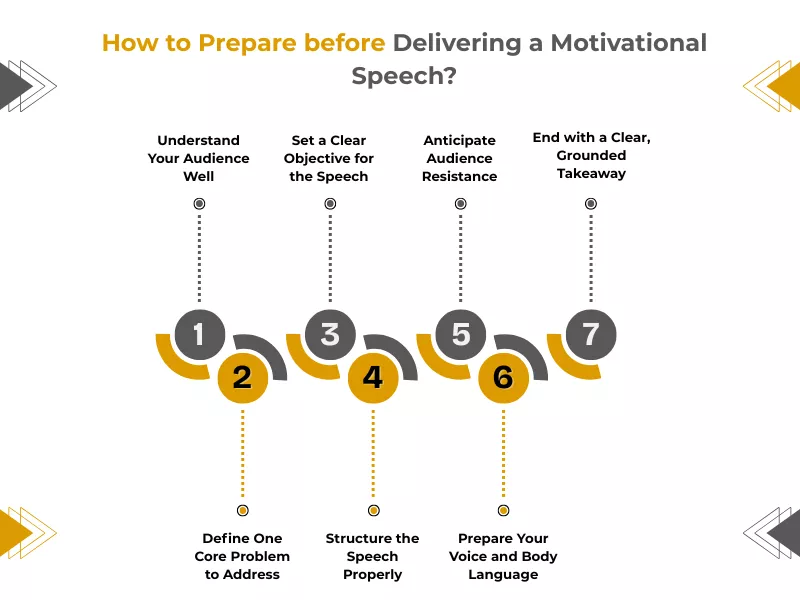
A. Understand Your Audience Well
This is one of the common points for both selecting a topic and preparing for the speech. The reason is that in order to captivate your audience, you need to understand them. Here’s what you need to identify:
- Age group
- Academic or professional stage
- Common struggles they face
- Emotional state
Effective motivational speeches address the pain points that resonate well with the target audience.
B. Define One Core Problem to Address
A motivational speech must solve one problem, not a lot of them. Therefore, when you prepare, you need to identify one problem that you want to address, for example:
- Fear of failure
- Academic burnout
- Career confusion
- Loss of confidence
- Pressure to succeed
You need to let your audience leave with one idea from the speech.
C. Set a Clear Objective for the Speech
You need to understand what you need your audience to do after they hear your speech. It is necessary to encourage your audience to take immediate action and feel motivated. Decide on what you want the audience to:
- Think differently about
- Stop doing
- Start doing
- Feel less afraid of
D. Structure the Speech Properly
Do not take the stage without structuring your speech properly. Pick the points you want to start with, how you want to introduce the topic, and the way to take your audience through to the main point. Also, make sure to identify where you will use your stories and examples to further justify the topic.
E. Anticipate Audience Resistance
You cannot overlook the resistance that might come from the audience. Everyone will not agree with your points. Therefore, when you prepare for your speech, make sure you anticipate the resistance that you might face. This will help you close all the gaps and present a speech that aligns well with your audience.
F. Prepare Your Voice and Body Language
An expressionless speech will be boring. You need to prepare your voice and body language to keep your audience glued to their seats. What you need to do is:
- Practice pauses
- Control speaking speed
- Avoid constant movement
- Maintain a relaxed posture
G. End with a Clear, Grounded Takeaway
The call to action is the main part of the entire speech. You must end with a clear, grounded takeaway that outlines what your audience should do after your speech.
You can take a look at the ways to write a motivational speech.
To End with,
Delivering a motivational or inspirational speech is in itself a big responsibility. You need to take a lot of things into account to deliver a speech that not only motivates but also makes others take immediate action.
The process starts with finding a topic that you can relate to, which is not outdated as well. So, when you are asked to deliver a motivational speech, choose the right topic to make a great lasting impression. Now that you have so many options, we feel you will not have a problem finding the right one.
Go ahead, pick the one that interests you the most!
Frequently Asked Questions
What is the best motivational speech topic?
Martin Luther King Jr’s ‘I have a dream’ is often considered to be the best motivational speech topic. The reason is that it uses rhythmic repetition and clear imagery to inspire change and unity. It helped make it timeless and impactful.
What is the best topic for a 5-minute speech?
A perfect topic for a 5-minute speech can be ‘Perseverance in the face of failure’. The topic has the power to grab the audience’s attention with personal stories of overcoming setbacks. It can boost confidence and leave a lasting impression on the minds of your audience.
How do I find unique motivational topics that hasn’t been overused?
The answer to this lies with you. Look for topics related to AI, mental health in remote work, or remote learning, and opt for a personal story twist. Brainstorm niche angles that can make your speech unique.
Can a motivational speech be about overcoming the fear of public speaking?
Yes, a motivational speech can be about overcoming the fear of public speaking. You can use humor to engage, share a personal story, and convince the audience to take action by sharing simple tactics.
What are the different types of motivational speeches?
The different types of motivational speeches are:
- Hero speeches
- Survivor speeches
- Religious speeches
- Success speeches
- Personal development speeches
- Leadership talks
How do motivational speech topics vary by audience age?
Motivational speech topics differ with audience age. The topics focus on relatable challenges, growth stages, and aspirations to ensure they grab the attention of an audience of different ages. Personal stories and tactics are also customized accordingly.
Related Posts




Want To See My Profile — Check Now
- A List of 250+ Trending Motivational Speech Topics in 2026 - January 19, 2026
- 400+ Trending Argumentative Essay Topics for Students - November 12, 2025
- 90 History Project Ideas for High School Students - September 9, 2025

 ABOUT BUYONLINECLASS
 7,500+
 28K+
28K+