As a business student, if you fail to understand the key difference between corporate finance vs personal finance, there’s a high chance you will not get good grades.
Both deal with managing money, but they differ completely in goals, scale, decision frameworks, and the tools used to calculate outcomes. The main difference between corporate and personal finance is that corporate finance teaches you how firms create value, and personal finance teaches you how to manage your own career earnings, debt, and investments wisely.
When taking an online finance class, you need to know more than this to get top grades. This article covers the main principles, how they differ, real examples, which one is harder, and a solution to get good grades when you struggle with the subject.

Key Takeaways: Understanding Corporate vs Personal Finance Made Simple
- Corporate finance deals with financial investments of an organization, while personal finance deals with personal financial investments.
- While corporate finance uses analytical frameworks like Net Present Value (NPV), Internal Rate of Return (IRR), and Weighted Average Cost of Capital (WACC), personal finance relies on debt payoff strategies, compound growth, asset allocation, and cash-flow tracking.
- Students need to learn both corporate and personal finance concepts to do well in the coursework, write proper case studies, and generate proper reports.
What Is Corporate Finance?
Corporate finance, as the name suggests, deals with the financial activities of a corporation or business.
Take Walmart, for instance. If Walmart needs to make financial decisions, it will think of:
- What more projects, assets, or investments they can invest in (capital budgeting)
- How to fund those investments (capital structure: debt vs equity)
- How to manage cash, working capital, and payouts to shareholders (dividends, buybacks)
Basically, your main objective will be to make financial decisions that will maximize the shareholders’ value.
What Business Students Must Know in Corporate Finance?
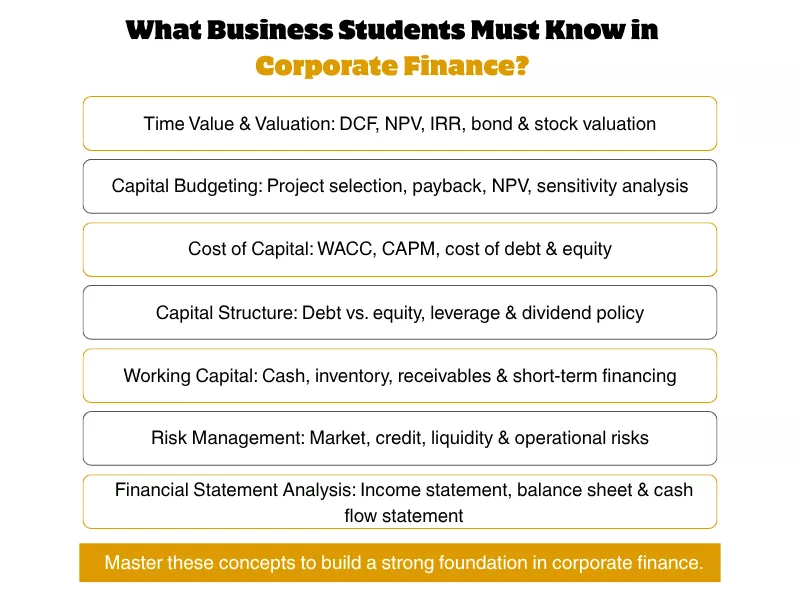
Most students choose finance class help because they fail to understand the basics properly. Whether you want to become a corporate financial analyst or auditor, you need to learn the corporate finance basics first.
From internships to writing case studies, you will come across the following concepts repeatedly:
- Time Value of Money and Valuation: Every financial or investment decision depends on discounted cash flow (DCF), NPV, IRR, and bond and stock valuation.
- Capital Budgeting: NPV rule, payback, scenario/sensitivity analysis help you learn about budgeting and how firms choose a project.
- Cost of Capital: WACC, cost of equity (CAPM), cost of debt, and how capital structure affects value help firms with corporate financial planning.
- Capital Structure & Financing Choices: You need to learn about trade-offs between debt and equity, leverage, financial distress, and dividend policy for understanding the structure & choices firms make.
- Working Capital Management: You will learn about how a firm deals with cash, receivables, inventory, and short-term financing in this.
- Risk Management: A financial student hears this topic the most: the basics of hedging and derivatives in a corporate context. Risk management deals with market, credit, liquidity, and operational risk.
- Financial Statement Analysis: When learning about financial concepts, you will have to analyze income statements, balance sheets, and cash-flow statements.
If you are a finance student and you are unable to quite make sense of these concepts, getting finance homework help can be a helpful option.
Corporate Finance Formulas
| Formula/Concept | Formula | Where to Use in the Article |
| Future Value (FV) | FV = PV × (1 + r)ⁿ | Time Value of Money |
| Present Value (PV) | PV = FV ÷ (1 + r)ⁿ | Time Value of Money / Valuation |
| Net Present Value (NPV) | NPV = Σ [CFₜ ÷ (1 + r)ᵗ] − Initial Investment | Capital Budgeting |
| Internal Rate of Return (IRR) | 0 = Σ [CFₜ ÷ (1 + IRR)ᵗ] − Initial Investment | Capital Budgeting |
| Weighted Average Cost of Capital (WACC) | WACC = (E/V × Rₑ) + (D/V × R𝒅 × (1 − T𝒄)) | Cost of Capital |
| Cost of Equity (CAPM) | Rₑ = R𝒇 + β(Rₘ − R𝒇) | Cost of Capital |
| Return on Equity (ROE) | ROE = (Net Income ÷ Shareholders’ Equity) × 100 | Performance Measurement |
| Return on Invested Capital (ROIC) | ROIC = (NOPAT ÷ Invested Capital) × 100 | Performance Measurement |
| Earnings Per Share (EPS) | EPS = (Net Income − Preferred Dividends) ÷ Weighted Average Shares | Performance Measurement |
| Free Cash Flow (FCF) | FCF = Operating Cash Flow − Capital Expenditures | Valuation / Financial Analysis |
What Is Personal Finance?
Personal finance mainly focuses on an individual’s or household’s financial activities. So, when talking about individual finances, one needs to think of:
- Budgeting and cash-flow management
- Saving, investing, and retirement planning
- Debt management, insurance, and tax planning
In short, personal finance management promotes financial security and the achievement of personal life goals.
What Business Students Must Know in Personal Finance?
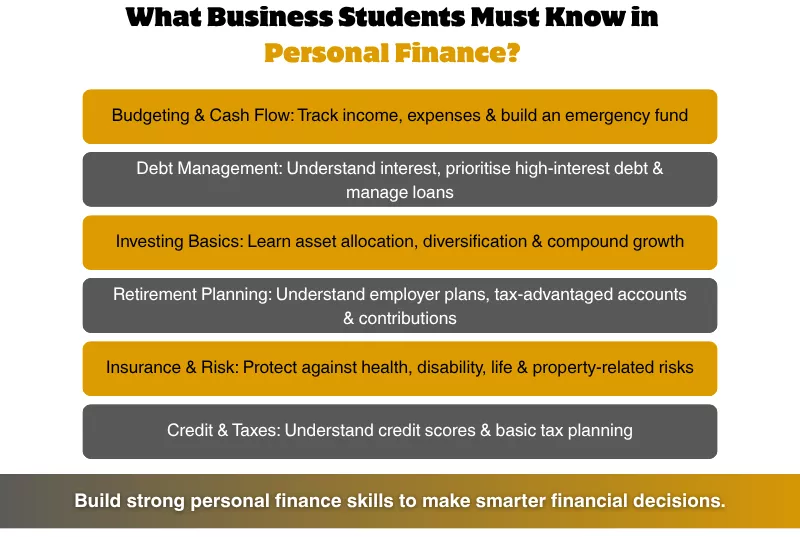
Personal financial management helps you handle your money, budget your income, pay your bills, and save for the future even in real life. Therefore, when tackling personal finance coursework, do remember that your own financial decisions will affect the core result: career choices, risk tolerance, and long-term well-being:
- Budgeting and Cash-Flow Control: This helps you track income/expenses and build an emergency fund (typically 3–6 months of expenses).
- Debt Strategy: This will help you learn about compound interest, prioritize high-interest debt, and manage student loans/mortgages.
- Investing Basics: Personal financial planning helps with asset allocation, diversification, low-cost index funds, and the power of compounding over decades.
- Retirement Planning: Personal finance basics secure your future by helping you with employer plans, contribution limits, tax-advantaged accounts, and rough “replacement rate” targets.
- Insurance and Risk Protection: Every step in life cannot be planned; this topic helps guard yourself against catastrophic losses such as sudden health issues, disability, life, and property insurance.
- Credit and Taxes: Before you hire a take my online class expert, learn about how credit scores work and basic tax planning to avoid common pitfalls.
Expert Tip: When you are tackling Corporate Finance vs Personal Finance or any other subject, try to relate the concepts to yourself. This will help you understand and memorize the concepts better.
Personal Finance Formulas
|
Formula/Concept |
Formula |
Where to Use in the Article |
|
Compound Growth / Compound Interest |
A = P(1 + r/n)ⁿᵗ |
Savings & Investing |
|
Present Value |
PV = FV ÷ (1 + r)ⁿ |
Retirement / Investment Planning |
|
Savings Rate |
Savings Rate = (Amount Saved ÷ Gross Income) × 100 |
Budgeting & Cash-Flow Control |
|
Debt-to-Income Ratio (DTI) |
DTI = (Monthly Debt Payments ÷ Gross Monthly Income) × 100 |
Debt Management |
|
Monthly Cash-Flow |
Cash Flow = Monthly Income − Monthly Expenses |
Budgeting |
|
Net Worth |
Net Worth = Total Assets − Total Liabilities |
Personal Financial Health |
|
Investment Return |
Return = [(Ending Value − Beginning Value) ÷ Beginning Value] × 100 |
Investing |
|
Emergency Fund Requirement |
Emergency Fund = Monthly Essential Expenses × Number of Months |
Emergency Fund Planning |
|
Loan Payment |
PMT = P × [r(1+r)ⁿ ÷ ((1+r)ⁿ − 1)] |
Student Loans / Mortgages |
Key Difference between Corporate Finance vs Personal Finance
Now, let’s understand the differences between corporate finance and personal finance, so when you are taking a class in Pearson MyLab and finding accurate MyFinanceLab Answers, it will be easier for you.
|
Dimension |
Corporate finance |
Personal finance |
|
Who decides |
CFO, finance team, board, investors |
You (often with a planner) |
|
Primary objective |
Maximize firm/shareholder value |
Achieve personal financial security & life goals |
|
Time horizon |
Long-term strategic (multi-year projects) |
Life-cycle (short-, medium-, long-term personal goals) |
|
Scale & complexity |
Large capital budgets, multiple stakeholders, regulatory reporting |
Household income/expenses, fewer formal constraints |
|
Risk focus |
Business, market, credit, liquidity, operational risk; hedging |
Income risk, health, property, longevity; insurance & diversification |
|
Tools & metrics |
NPV, IRR, WACC, DCF, ratio analysis, financial modeling |
Budgets, emergency funds, asset allocation, credit scores, retirement calculators |
|
Funding sources |
Debt (bonds, loans), equity (shares), retained earnings |
Salary, savings, personal loans, mortgages, retirement accounts |
|
Performance measure |
Share price, ROE/ROIC, EPS, free cash flow |
Net worth, savings rate, debt-to-income, retirement readiness |
What Are Examples of Corporate Finance?
Here are a few examples by Buy Online Class experts:
Imagine a premium coffee brand in the US is planning to open up a store in front of a university campus. Now, it needs to estimate the renovation costs, employee wages, expected sales, rent, and future profits.
Capital budgeting will help the company to compare expected future cash flows and upfront investment. This analysis leads to the decision-making: whether to open the store or not!
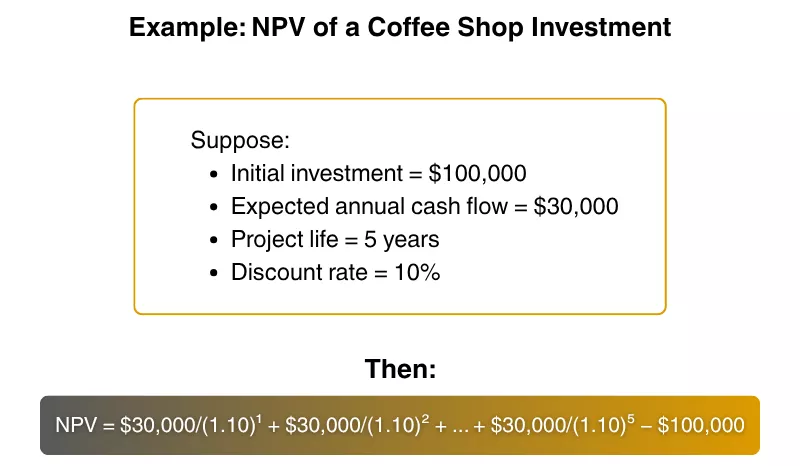
Let’s take another example:
This premium coffee brand wants to import raw materials such as coffee beans from Africa. Now, they will connect with an overseas supplier. To reduce financial risk, the company will use financial contracts to manage exchange-rate risk.
Unless they calculate and plan properly, a weaker U.S. dollar can raise the company’s purchasing costs unexpectedly, leading to losses.
What Are Examples of Personal Finance?
You usually earn $900 per month from your campus job. Now, imagine it’s your birthday month, and your friends want you to throw a party.
So, you can actually use the budgeting concept to better manage your expenses, and you won’t be a bit short on cash ever. How?
Zero-based budgeting or income allocation every month once you get paid will help you allocate the money for rent, groceries, phone service, transport, and course materials. The rest you can use for entertainment and savings.
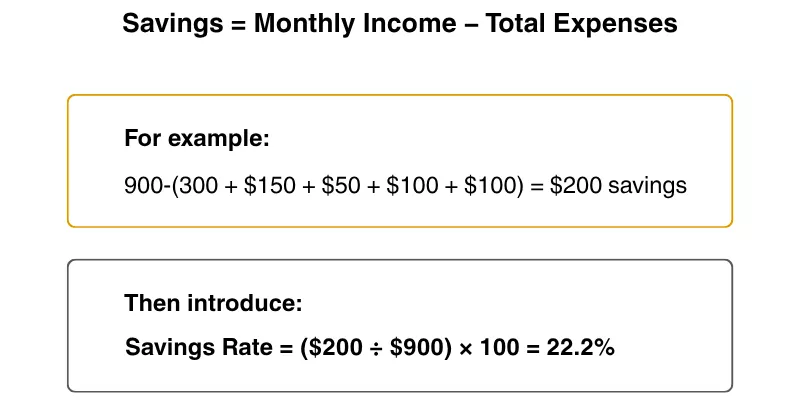
Let’s take another example:
You are a student who needs to repay the student loan. After graduation, you started earning $52,000 a year. Now, to never miss the loan repayment, you add it to your monthly budget. Furthermore, you set up automatic payments and review repayment options through StudentAid.gov.
Is Corporate Finance Harder Than Personal Finance?
Many students find corporate finance more challenging than personal finance.
Since corporate finance generally involves complex mathematical models, large-scale risk management, and strategic decision-making for entire organizations, it becomes more challenging.
Furthermore, you need deep knowledge of financial statements, valuation techniques, and advanced financial modeling to properly understand the concepts, solve the problems, and write the case studies, as your errors might affect share prices, lead to bankruptcy, or impact hundreds of employees.
Conclusion
Corporate finance vs personal finance will always be a major point of discussion among students. In online classes, students often face more challenges because they lack direct teacher guidance. At BuyOnlineClass, we aim to help finance coursework students by offering tailored help.
Therefore, whether you need help to complete your homework, write your case study, make a finance report for a corporation, or seek answers to questions, we have a deep bench of finance experts. They hold advanced degrees and are available 24/7 via live chat, personal dashboard, email, or WhatsApp to help manage your classes.
So, if you are stuck on a complex corporate finance case study or personal finance assignment, let us know. Our finance experts can handle your coursework and exams for you.
Frequently Asked Questions about Corporate Finance vs Personal Finance
Can you apply corporate finance principles to personal finance?
Core corporate principles like calculating Time Value of Money, managing liquidity, diversifying asset portfolios, and analyzing return on investment can be applied to personal finance. This helps because individuals make decisions like buying real estate, funding education, or building long-term investments.
What tools are used in corporate finance versus personal finance?
In corporate finance, students need to use tools like Microsoft Excel, financial databases like Bloomberg Terminal and S&P Capital IQ, and enterprise ERP systems like NetSuite. In personal finance, students need to use YNAB or Empower, credit monitoring software, and personal tax preparation tools.
How does risk management differ between corporate and personal finance?
Corporate risk management uses hedging instruments, derivatives, and strategic portfolio structures to mitigate market, credit, operational, and liquidity risks for an organization. Personal risk management uses basic asset diversification and personal insurance policies (health, life, disability, auto) to protect against sudden personal losses.
Which finance path offers better career opportunities for business students?
Corporate finance leads to executive roles like CFO, financial analyst, controller, or corporate treasurer, while personal finance paths lead to roles such as Certified Financial Planner (CFP), wealth manager, or independent financial advisor.

- How to Identify Fake Academic Services: 6 Red Flags No One Talks About - September 29, 2026
- How to Improve Performance in Online Classes: Tips for College Students - September 25, 2026
- Full Semester Support vs Assignment Support: Choosing the Right Help - September 23, 2026

 ABOUT BUYONLINECLASS
 7,500+
 5621+
5621+