Planning to outsource your assignments, quizzes, or coursework? While this can help you manage classes, meet deadlines, and complete coursework properly, you need to watch out for academic help scams.
Students today face risks such as identity theft and financial fraud, while scammers may use personal information and university login details to blackmail students.
Don’t worry. We’ve got your back. By the end of the blog, you will learn how to identify fake academic services and choose reliable academic help services among the available options.
Let’s begin!

Key Takeaways: What Are the Biggest Red Flags of a Fake Academic Service?
- Academic helpers can’t guarantee grades, but some make unrealistic promises, such as “100% pass” or guaranteed grade improvements.
- Some service providers offer discounts, offers, and referral options. However, if someone claims huge discounts and is cheaper than most, be careful about the quality of the work.
- You might come across sites that constantly share countdown timers, “last slot” messages, or repeated follow-ups; these are all academic service red flags.
- Legitimate academic services have multiple contact options, so be cautious of services that offer only a form or disposable email.
- Before hiring an academic help service provider, read their policies on revisions, refunds, cancellations, privacy, and delivery timelines. If they don’t have clear policies, that’s a red flag.
- Avoid services that insist on cryptocurrency or gift card payments. Legit services usually have options like bank transfer, credit/debit card, or wire transfers.
What Are the Most Common Types of Academic Service Scams?
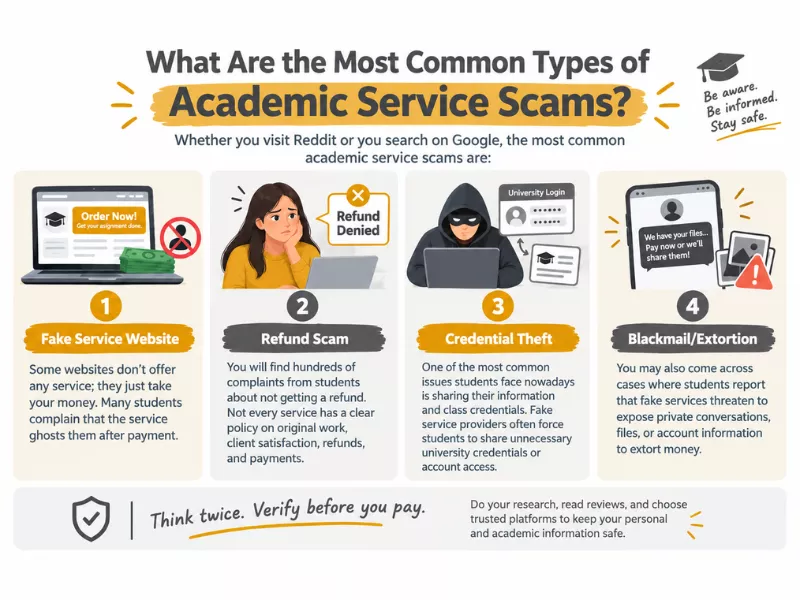
Whether you visit Reddit or search on Google, some common academic service scams include:
- Fake Service Website: Some websites don’t offer any service; they just take your money. Students complain that the service ghosts them after payment.
- Refund Scam: You will find hundreds of complaints from students about not getting a refund. Not every service has a clear policy on original work, client satisfaction, refunds, and payments.
- Credential Theft: One of the most common issues students face nowadays is sharing their information and class credentials. Fake service providers often force students to share unnecessary university credentials or account access.
- Blackmail/Extortion: You may also come across cases where students report that fake services threaten to expose private conversations, files, or account information to extort money.
What Should a Legitimate Academic Service Be Transparent About Before I Place an Order?
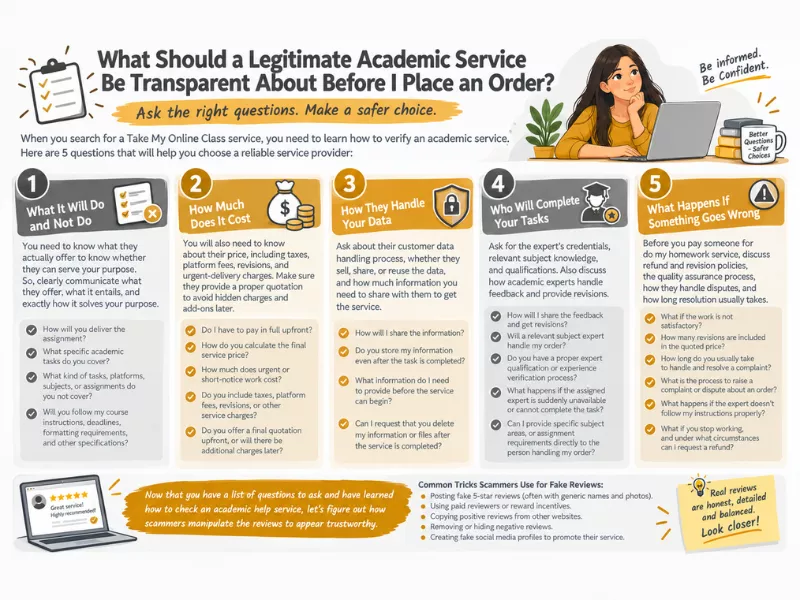
When you search for a Take My Online Class service, you need to learn how to verify an academic service. Here are 5 questions that will help you choose a reliable service provider:
Question 1: What It Will Do and Not Do
You need to understand exactly what they offer and whether it meets your needs. Ask the provider to clearly explain what they offer, what it entails, and exactly how it solves your purpose.
- How will you deliver the assignment?
- What specific academic tasks do you cover?
- What kind of tasks, platforms, subjects, or assignments do you not cover?
- Will you follow my course instructions, deadlines, formatting requirements, and other specifications?
Question 2: How Much Does It Cost
You will also need to know about their price, including taxes, platform fees, revisions, and urgent-delivery charges. Make sure they provide a proper quotation to avoid hidden charges and add-ons later.
- Do I have to pay in full upfront?
- How do you calculate the final service price?
- How much does urgent or short-notice work cost?
- Do you include taxes, platform fees, revisions, or other service charges?
- Do you offer a final quotation upfront, or will there be additional charges later?
Question 3: How They Handle Your Data
Ask about their customer data handling process, whether they sell, share, or reuse the data, and how much information you need to share with them to get the service.
- How will I share the information?
- Do you store my information even after the task is completed?
- What information do I need to provide before the service can begin?
- Can I request that you delete my information or files after the service is completed?
Question 4: Who Will Complete Your Tasks
Ask for the expert’s credentials, relevant subject knowledge, and qualifications. Also discuss how academic experts handle feedback and provide revisions.
- How will I share the feedback and get revisions?
- Will a relevant subject expert handle my order?
- Do you have a proper expert qualifications or experience verification process?
- What happens if the assigned expert is suddenly unavailable or cannot complete the task?
- Can I provide specific subject, course, or assignment requirements directly to the person handling my order?
Question 5: What Happens If Something Goes Wrong
Before you pay someone for do my homework service, discuss refund and revision policies, the quality assurance process, how they handle disputes, and how long resolution usually takes.
- What if the work is not satisfactory?
- How many revisions are included in the quoted price?
- How long do you usually take to review and resolve a complaint?
- What is the process to raise a complaint or dispute about an order?
- Do you offer a proper plagiarism and AI-checking report with the work?
- What happens if the expert doesn’t follow my instructions properly?
- What is your refund policy, and under what circumstances can I request a refund?
Now that you have a list of questions to ask and have learned how to check an academic help service, let’s figure out how scammers manipulate the reviews to appear trustworthy.
How Can I Check Whether Reviews for an Academic Service Are Real?
To compare academic services properly, you need to search beyond the website reviews. While these online class and take my online exam help providers can replicate or add only positive reviews on their website. Third-party review sites can provide additional evidence, but you should also evaluate their reviews critically.
Visit third-party review sites like SmartCustomer (formerly Sitejabber), Reviews.io, or Trustpilot, search by the website name, then search the reviews for terms like scam, complaint, refund, and blackmail.
You can also find detailed reviews and see how they perform by searching review websites that specifically review these service providers, like reviewsforonlineclasshelp, takeonlineclassreview, and onlineclasshelpreview.
These websites hire academic experts and share their original experience about top online class help services, helping students compare multiple services in one place.
How Should I Compare Academic Services without Trusting Only the Reviews on Their Own Websites?
Of course, you need to compare academic services, no matter how good the reviews are. This matters because not every website is designed for every task.
Some are genuinely good for managing classes, while others may be better for taking exams, and still others for writing essays and completing homework.
For instance, you might find multiple reliable services. But not all are good for every kind of task. Some might be more familiar with LMSs and are best for accurate McGraw Hill Connect Answers, while others might be more trustworthy for Pearson MyLab answers.
To compare the services, you can follow the process below:
- First, ask specific questions about the service, price, academic experts, privacy, and refund policy.
- Then, test them by placing an order for a small assignment or a pay-as-you-go task.
- If they ask for your passport details, full class student ID, or login details unnecessarily to complete a small assignment as per your study plan template, then you already know they are not reliable enough.
- Lastly, keep the invoice, terms, messages, draft, and feedback in writing so you can take action or unmask the academic service scam if something goes wrong.
Next, let’s look at how to verify experts’ qualifications and authenticity.
How Do I Know Whether the Experts Advertised by an Academic Service Are Genuine?
Verifying the credentials and qualifications of the academic experts is essential. Though you might not be able to verify their qualifications directly because many academic helpers prefer to keep their identity hidden, you can always ask for details and look for signs.
The most practical way to verify their credentials is to assign a small task, then check their depth of knowledge, platform expertise, writing skills, and deadline-driven approach. However, paying an unknown provider for a first assignment can involve considerable uncertainty.
That’s why it is better to hire experts from established service providers than to trust a freelance or academic helper from forum sites such as Reddit. These websites have been offering services for a decade or more. They also have proper vetting processes and professional ethics, which have helped them stay in business for so long.
For instance, genuine academic help websites like Buy Online Class Services have a proper vetting process. We don’t randomly hire academic helpers; we review their qualifications and credentials, run a full background check, assign an assignment to confirm their hands-on experience, review and share feedback with the team lead, and then let them handle your task. We also ask students for feedback after each task to continuously improve our services.
What Should I Do If an Academic Service Already Scammed Me?
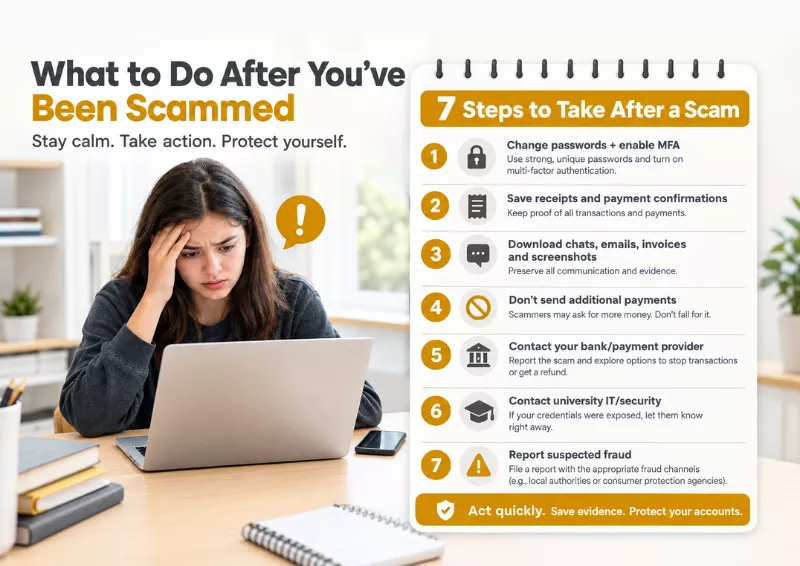
If you have already paid, then there’s very little you can do unless you have credible evidence to prove your claim. Here’s what you need to do:
- First, change passwords if you shared account credentials and enable MFA where available.
- Download the receipts and payment confirmations.
- Then, download all email chains, chats, invoices, and screenshots exchanged throughout the process.
- Do not pay them if they ask for additional payments, even if the provider keeps demanding money.
- Contact your bank or payment provider about available dispute options.
- Contact your university’s appropriate IT/security office if university credentials were exposed.
- Report suspected fraud through the appropriate US consumer/fraud-reporting channels.
Conclusion
When hiring someone to do your assignments, the most essential thing you need to learn is how to identify fake academic services. This not only ensures your academic performance but also protects your money. We believe our process and the signs we discussed will help you separate scammers from legitimate service providers. For more information or help, contact us. We are available 24/7 for you.
Frequently Asked Questions about How to Identify Fake Academic Services
How to tell if an academic service is legit?
To tell if an academic assistance service is legitimate, look for transparent policies, secure payment options, and realistic communication rather than guaranteed top grades.
How to verify an online class help service?
To verify an online class help service, check for transparent pricing, verifiable subject expertise, secure data privacy policies, and authentic, independent third-party reviews.
What information should you never give an academic service?
Unless you are hiring someone for complete coursework help, you should never share the following:
- University password, MFA/2FA codes
- Personal email password and Social Security number
- Banking login credentials
- Full credit/debit card details outside a secure payment processor
- Passport or driver’s license unless there is a legitimate, clearly explained reason
- Security-question answers
- Unnecessary access to university accounts
- Authentication codes sent to their phone or email
How to avoid getting scammed by an online academic service?
Stay away from services that demand 100% upfront payment, send deeply suspicious random emails, text messages, or social media DMs, have no clear policies, and make too-good-to-be-true offers.
How can I verify whether an academic service is a real business?
To verify an academic service is a real business, cross-check its official registration, physical contact details, and independent credentials (if any).

- How to Identify Fake Academic Services: 6 Red Flags No One Talks About - September 29, 2026
- How to Improve Performance in Online Classes: Tips for College Students - September 25, 2026
- Full Semester Support vs Assignment Support: Choosing the Right Help - September 23, 2026
 ABOUT BUYONLINECLASS
 7,500+
 5621+
5621+